The first 48 hours after hail or wind hits your East Texas roof
A calm order of operations for the day after a storm, so the choices you make early are ones you'll be glad you made.
October 13, 2026 · 4 min read
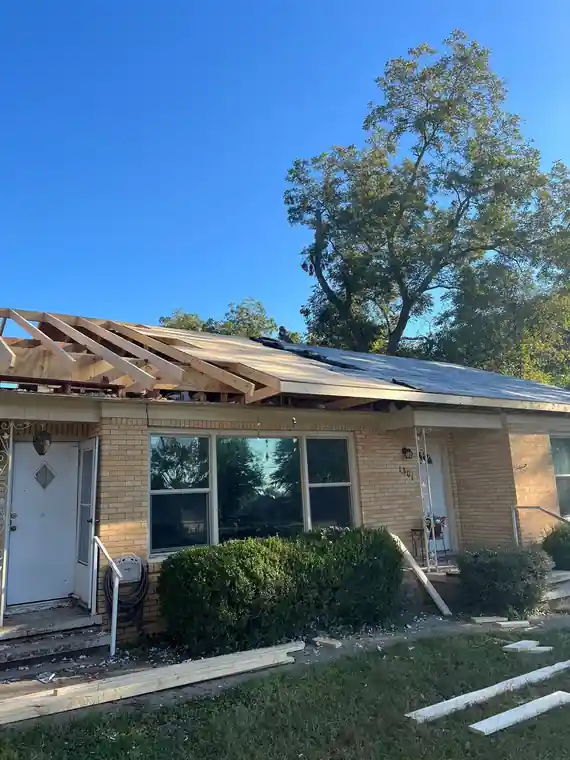
A storm rolls through Smith County, the sirens go quiet, and the next morning you walk outside to see what it left behind. Maybe there's a limb across the driveway. Maybe there are shingles in the flower bed. Maybe everything looks fine from the street and you just have a feeling. The first two days after hail or wind hits a roof matter more than most people expect, mostly because the decisions you make early are the ones you'll live with later. Here's a plain order of operations.
Hour one: make sure everyone is safe
Roof damage is never worth an injury. Before anything else, check on the people and pets in the house, then look for the hazards that come with a storm: downed power lines, limbs hanging over the roofline, standing water near outlets, and ceilings that sag or drip. If you see a power line down, keep well away from it and call your utility. If water is coming through a ceiling near a light fixture, switch off power to that room at the breaker, but only if you can reach the panel safely.
Stay off the roof yourself. Wet shingles, loose granules and a steep pitch are a bad combination, and a roof that just took a beating may not hold weight. You can learn a lot from the ground.
Look from the ground first
Walk the whole property in daylight and look up. Here's what is worth noticing:
- Shingles or pieces of shingles in the yard, the driveway or the flower beds
- Bare patches or dark, exposed squares on the roof where shingles used to be
- Dented gutters, downspouts, vents and flashing, because hail often marks soft metal before the damage is obvious on the shingles
- Dings on the garage door, the air conditioner condenser, the mailbox or the siding
- Limbs or whole trees that landed on or near the house
- Damp spots, stains or drips on ceilings and walls, and anything in the attic that looks wet
Hail damage in particular can be hard to see. A roof can look fine from the curb and still have bruised or cracked shingles, with granules knocked loose. That's why a trained set of eyes up close is worth more than your own guess from the driveway. One Google review of BXC Roofing describes an inspection that found many areas of hail damage that other companies who stopped by had never found or mentioned.
Take photos before you touch anything
Photograph everything while it's fresh. Take wide shots of each side of the house, close shots of damage, yard debris, dented metal and stains inside. Keep them together in one folder on your phone. If a limb is lying on the roof, photograph it before it's moved. Then write down when the storm came through and what you saw.
Stop more damage from happening
A damaged roof that stays open to the weather turns a repair into a bigger repair. Keeping a damaged home from getting worse is just good sense, and it's also worth mentioning when you talk to your insurance company, so keep receipts for anything you buy to protect the house.
Inside, move furniture and electronics away from any leak and put a bucket under the drip. Outside, a tarp or board-up is the usual stopgap, but it isn't a casual do-it-yourself job. A tarp has to be fastened so that it sheds water and doesn't lift at the next gust, and whoever installs it has to work on a roof that may be compromised. BXC Roofing's storm damage and flood recovery work includes board-up and tarping, and the company lists around-the-clock emergency response for exactly this situation.
Be careful with door-knockers
After a big storm, crews often go door to door. Some are good. Some are gone by the time you need a callback. Before you sign anything, ask where the company's office is and who you'd call about a problem a year from now. BXC Roofing is locally owned, based in Tyler on Texas Spur 124, and was co-founded in 2019 by two East Texans who grew up here. Whoever you pick, it's reasonable to say you'd like to read the paperwork and call back tomorrow.
Get a real inspection
The most useful thing you can do in the first couple of days is have the roof properly inspected by someone who will show you photos of what they found and explain it in plain words. BXC Roofing offers free, same-day inspections and estimates, so finding out where you stand doesn't cost anything. A good inspection covers the whole roof system, not just the shingles: flashing, vents, ridge, valleys, gutters, and the attic if there's any sign of water.
Call your insurance company with your photos in hand
Many homeowners will report storm damage to their insurance company. What applies to you depends entirely on your own policy, so read it or ask your agent. What helps is walking into that conversation with your photos, the date of the storm and an inspection report. Another article on this blog walks through how a roof claim generally flows and what a good inspection should document.
What can wait
You don't need to pick a shingle, a color or a contractor on day one. Get safe, document, stop the water and get the roof looked at. The rest can wait for a clear head.
If you're not sure where to start, call the BXC Roofing team at (903) 218-2322. The office is open Monday through Friday, 8 AM to 5 PM, and emergency help is there when the weather doesn't keep office hours.
BXC Roofing, (903) 218-2322
Call (903) 218-2322More articles
How a roof insurance claim works, and what an inspection should document
You don't need to be an insurance expert to start a claim, but you do need good documentation and someone in your corner.
Repair or replace? The signs your roof is done
Six warning signs that point toward a new roof, and how to think about the repair question honestly.