How a roof insurance claim works, and what an inspection should document
You don't need to be an insurance expert to start a claim, but you do need good documentation and someone in your corner.
October 13, 2026 · 4 min read
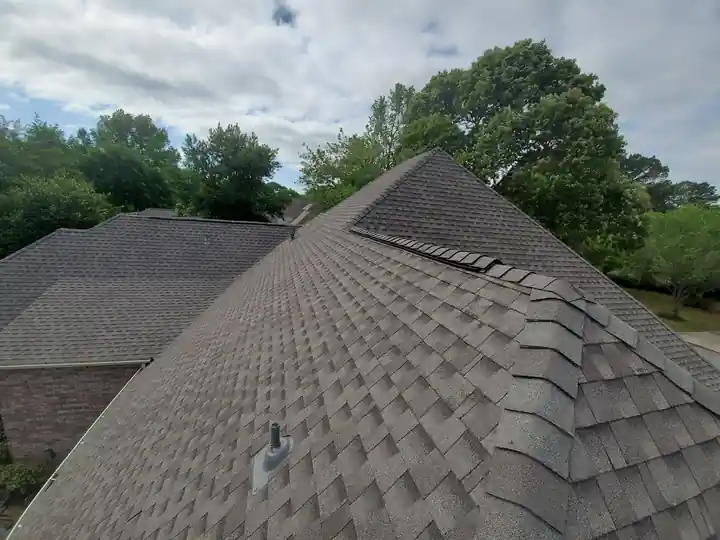
For most people, a roof claim is the first one they've ever filed on a house. The vocabulary is unfamiliar, the stakes are high, and the roof is in the middle of the story. This article describes the general shape of a storm damage roof claim and, more importantly, what a good roof inspection should put on paper. It can't tell you what your policy says. Only your policy and your insurance company can do that, so treat this as orientation, not advice about your coverage.
The general shape of a claim
Details differ from policy to policy and company to company, but most storm claims move through the same handful of stages. Knowing them in advance takes a lot of the mystery out.
- The storm happens and you notice damage, or someone points it out
- The roof is inspected and the damage is documented
- The claim is reported to your insurance company
- The insurance company reviews it, usually with its own inspection by an adjuster
- An estimate and a decision come back to you
- If the roof is approved for repair or replacement, the work is scheduled and completed
- A final inspection closes out the job
Notice that the very first real step is documentation. Everything after it leans on what was recorded at the start, which is why the inspection matters so much.
Why the roof inspection is the foundation
An adjuster will look at your roof, but they're looking at it for their employer. A contractor's inspection is yours. When it's done well, it gives you a clear, photographed account of the roof before anyone has told you what the claim is worth. BXC Roofing does free, same-day inspections and estimates, which means you can have that account in hand without paying for it or waiting a week.
Here's the part people don't always realize: damage you can't see from the ground still counts as damage. One Google reviewer wrote that BXC's salesperson did an entire roof inspection and found many areas of hail damage that other companies who came by never found or mentioned. A thorough inspection is a matter of patience and attention, not just a quick walk across the ridge.
What a good inspection should document
If someone hands you a one-page note that says roof damaged, you don't have much to work with. A useful inspection is specific. Look for these things:
- Overall photos of every slope, labeled by direction or section so anyone can tell which part of the roof they're seeing
- Close photos of individual damage, such as creased, cracked, bruised or missing shingles, with granule loss where it shows
- The condition of flashing, vents, pipe boots, chimneys, skylights and valleys, which are the places water likes to find
- Soft metals like gutters, downspouts and vent caps, where hail leaves dents that help confirm what hit the property
- Any sign of water getting in: stains on ceilings, wet insulation, daylight or damp spots in the attic
- Anything that was already worn out or failing before the storm, noted honestly, so the record is believable
- The age and general condition of the roof, if known
The honesty point matters more than it sounds. A report that overstates everything loses credibility fast. One that separates storm damage from ordinary wear is the one people take seriously.
Why having someone in your corner helps
Claims involve paperwork, phone calls and plenty of waiting. BXC Roofing lists customer focused insurance claim guidance among the reasons people choose them, and the company has a Claims Resolution Specialist, Baylee Wilabay, whose job is to advocate for homeowners through the process. She holds a nursing degree from UT Tyler and has been part of BXC's journey since the beginning, so the empathy is meant to come with the roofing know-how.
Customers say it makes a difference. In a Google review, one homeowner wrote that BXC handled their insurance. Another wrote that the team does the work of dealing with the insurance companies so you can sit back and relax. Those are customers describing their own experiences, and every claim is different.
Questions worth asking any contractor
- Will you give me photos and a written report from the inspection, and can I keep them?
- Who at your company will be my contact if the insurance company has questions?
- Have you worked with my insurance company before, and what happens if we disagree about something?
- What happens next once the claim is approved, and who schedules the work?
Keep your own file
Whatever happens, keep a folder, paper or digital, with your photos, the date of the storm, the inspection report, every estimate, the name of every person you talk to and the date of each call. Write down claim numbers. When a question comes up three weeks later, you'll be able to answer it in a minute instead of an afternoon.
Don't be rushed, and don't be passive
You'll hear urgency from all sides after a storm. Some of it is real, because open roofs get worse. Some of it is sales pressure. Ask your insurance company what applies to your specific policy, and ask any contractor to put their scope of work in writing before you sign. A good company will be glad to slow down and explain.
If you've had storm damage and you'd like a free inspection and a straight conversation about the claim process, you can reach BXC Roofing at (903) 218-2322.
BXC Roofing, (903) 218-2322
Call (903) 218-2322More articles
The first 48 hours after hail or wind hits your East Texas roof
A calm order of operations for the day after a storm, so the choices you make early are ones you'll be glad you made.
Repair or replace? The signs your roof is done
Six warning signs that point toward a new roof, and how to think about the repair question honestly.