Attic ventilation, gutters and the roof parts people forget
The shingles get all the attention, but a roof is a system, and the supporting parts are often where problems begin.
October 13, 2026 · 4 min read
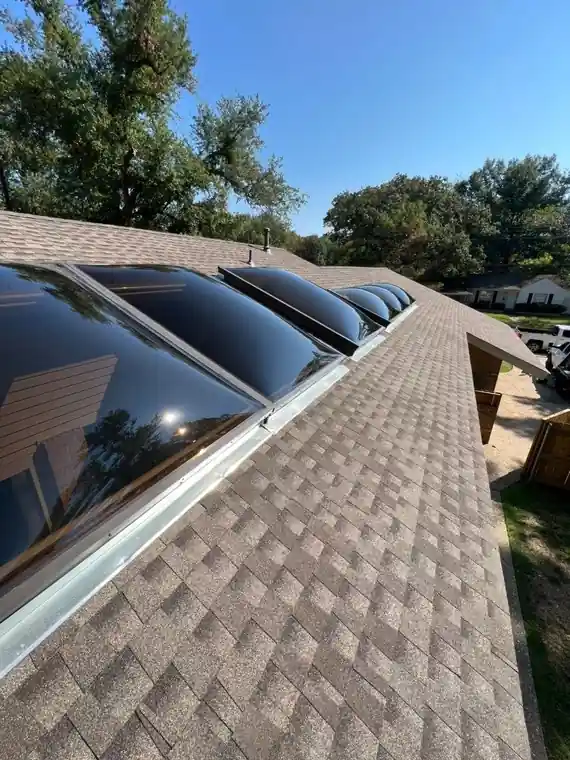
When people think about their roof, they picture shingles. That's understandable, since shingles are what you see from the street. But a roof is a system made of many parts, and the shingles are only the top layer. Leaks, rot and uneven wear often begin in the parts nobody thinks about: the attic air, the metal around the edges, the gutters at the bottom. This article walks through the pieces that tend to get forgotten.
Attic ventilation
Your attic needs to breathe. In an East Texas summer, an attic with poor airflow can get extremely hot, and that heat doesn't stay put. It can bake the underside of the roof and push warmth down into the rooms below. Proper ventilation gives air a path in and a path out, so heat and moisture don't linger.
You may see ridge vents, box vents, turbine vents, or vents tucked under the eaves. Which mix is right depends on the house. BXC Roofing lists attic ventilation and roof ventilation as services, and includes ventilation system assessment in its roof replacement scope. One customer who had a full replacement mentioned improved attic venting as part of the project in a Google review.
Soffits and fascia
Soffits are the underside of the roof overhang. Fascia is the board along the edge, where the gutters hang. Both do quiet but real work. Many soffits have vents that let fresh air into the attic, and they keep birds, squirrels and insects out. Fascia holds the gutters and protects the ends of the rafters. When either rots, peels or pulls loose, water and critters get in. BXC offers soffit installation and soffit repair, and that same reviewer's project included painting all the fascia, a reminder that edges deserve attention too.
Flashing
Flashing is thin metal that seals the places where a roof meets something else: a chimney, a wall, a vent pipe, a skylight, the valley where two slopes join. Shingles shed water across flat areas. Flashing handles the corners and joints where shingles alone can't. When flashing is bent, rusted, loose or poorly sealed, water finds its way in, and the leak often shows up far from where the water actually entered. That makes flashing one of the first places a careful inspector looks. BXC lists chimney flashing repair and valley repair among its specialty services, because these spots are common sources of leaks.
Underlayment and the deck
Under the shingles are two layers you'll never see unless the roof is open: the wood deck and the underlayment that covers it. If the deck is soft from past leaks, new shingles on top won't last the way they should. That's why BXC includes deck inspection and repair, plus flashing and underlayment replacement, when a roof is replaced.
Gutters
Gutters have one job, which is moving water away from the house. BXC's own description is that gutters protect your property from water damage and foundation problems. When they clog, sag or pull away from the fascia, water spills down the siding, pools near the foundation or backs up under the first row of shingles. Overflow, sagging sections and stains on the siding below are all worth fixing.
If trees overhang your roof, you're dealing with leaves and pine needles much of the year. Cleaning matters, and so does where the downspouts discharge. One BXC customer's replacement project included new gutters alongside the roof.
Skylights
A skylight brings in light, and it also adds a hole in your roof that has to be sealed perfectly. BXC puts it simply: skylights bring natural light into your space, but they require careful installation and maintenance to prevent leaks. If you have an older skylight with stains around the frame, or you're thinking of adding one, the flashing and the seal around the frame are the details that decide whether it stays dry.
Pipe boots, vents and other penetrations
Every pipe or vent that passes through your roof is a possible entry point. The rubber or metal collar around a plumbing vent, often called a pipe boot, is a common failure because the material cracks in the sun. It's small and easy to overlook until a ceiling stain appears. Ask your inspector to look at every penetration, not just the shingles around them.
A simple walk-around you can do yourself
- Look at the gutters after rain and see where water overflows or pools
- Check the soffits and fascia for peeling paint, soft wood, gaps or animal activity
- Notice whether your upstairs rooms run much hotter than the rest of the house
- Look at the ceiling around skylights, chimneys and vents for stains
- Peek into the attic on a safe, dry day and look for dark stains on the wood, damp insulation or daylight
- From the ground, look for rust, bent metal or loose pieces around the chimney and vents
Think of the roof as a whole
The most useful habit is to stop asking only whether the shingles look good, and start asking how the whole system is doing. Shingles, underlayment, flashing, ventilation, edges and gutters work as a team, and a weak link in one tends to wear out another. When a company inspects all of it, you get a more honest picture of where your money should go.
BXC Roofing does free, same-day inspections and estimates. If you'd like someone to look over the whole system, not just the shingles, call (903) 218-2322.
BXC Roofing, (903) 218-2322
Call (903) 218-2322More articles
The first 48 hours after hail or wind hits your East Texas roof
A calm order of operations for the day after a storm, so the choices you make early are ones you'll be glad you made.
How a roof insurance claim works, and what an inspection should document
You don't need to be an insurance expert to start a claim, but you do need good documentation and someone in your corner.